I've spent years overseeing the production of millions of FIBCs at our factory here in China. If you're a procurement officer like Mark Thompson in the USA, sourcing from overseas, you know that the quality of your bulk bags isn't just a detail—it's the foundation of your clients' operations. A single bag failure can lead to costly spills, product contamination, and serious safety hazards. This article is your behind-the-scenes pass to our factory floor. We'll walk through the entire FIBC manufacturing process, from raw resin pellets to the final, tested jumbo bag. Understanding how bulk bags are made will empower you to ask the right questions, identify high-quality suppliers, and ensure you receive a product that is safe, reliable, and perfectly suited to your needs.
What Raw Materials Are Used to Make Bulk Bags?
The journey of a bulk bag begins with its core component: polypropylene. As a manufacturer, the quality of the finished product is directly tied to the quality of the raw materials we start with. For us, this isn't just a line item; it's the most critical decision in the entire manufacturing process. We primarily use a mix of virgin polypropylene (PP) resin, which looks like small, clear plastic pellets. Using virgin PP ensures maximum strength, durability, and consistency, which is non-negotiable for the heavy-duty applications our clients in the agriculture, mining, and chemical industries demand.
Of course, the material used isn't just polypropylene. To enhance performance and longevity, we blend the PP resin with specific additives. One of the most important is a UV inhibitor. Many bulk bags are used and stored outdoors, exposed to direct sunlight. Without protection, ultraviolet radiation can degrade the polypropylene fabric, making it brittle and weak. By adding a UV inhibitor during the initial stage, we ensure the bags can be used for extended periods in harsh conditions without compromising their structural integrity. Additionally, a small amount of calcium carbonate is often added as a filler, which can aid in the processing and improve certain properties of the final fabric.
The selection of these materials is the first and most crucial step. It sets the standard for everything that follows. When you're vetting suppliers, asking about their raw material sourcing is a great starting point. Do they use 100% virgin polypropylene? What kind of UV protection do they offer? A transparent supplier will have no problem providing these details, as it’s a point of pride. This initial choice is what makes bulk bags either a reliable asset or a potential liability for your business.
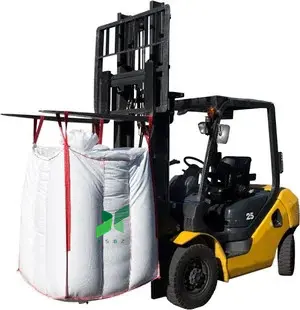
How Does the Extrusion Process Turn Resin into Fabric Tape?
Once we have our precise blend of polypropylene resin and additives, the manufacturing process starts with extrusion. This is where the magic of turning small pellets into strong, workable fabric begins. The extrusion process involves feeding the resin mixture into a large extruder, which heats the pellets to over 240°C (464°F) until they melt into a thick, homogenous liquid. This molten PP is then forced through a die, which is a specialized tool that shapes the plastic into a thin, continuous film.
This film is then cooled rapidly in a water bath before being cut by a series of precisely spaced blades into dozens of thin, individual strands. These strands are what we call tape. But they aren't ready just yet. The next step is crucial for building strength: the tapes are passed through a series of heated rollers, stretching them to several times their original length. This process, called annealing, aligns the polymer molecules, dramatically increasing the tensile strength of the tape. The thickness, width, and strength of this tape are meticulously controlled, as they will directly determine the properties of the final FIBC fabric.
At our facility, we have seven production lines running, and the extrusion line is the heart of the operation. The quality of the tape produced here dictates the performance of the final FIBC. We constantly monitor temperature, pressure, and roller speed to ensure every bobbin of tape meets our strict specifications. This precision is essential because this tape will soon be woven into the very fabric that contains tons of bulk materials.
What is the Weaving Process for FIBC Fabric?
With hundreds of bobbins full of high-tensile polypropylene tape, we move to the next stage: the weaving process. This is where the individual tapes are transformed into the strong, flexible woven polypropylene fabric that forms the body of the FIBC. The bobbins are loaded onto massive circular looms, which are fascinating pieces of machinery. A circular weaving loom can have over 800 bobbins feeding it simultaneously.
The loom works by interlacing the tapes in a perpendicular pattern. The vertical tapes are known as the "warp," and the horizontal tapes are the "weft." The loom lifts and lowers the warp tapes in a specific sequence while a shuttle carries the weft tape between them at incredible speed. This tight, interlocking weave is what gives the FIBC its signature strength and durability. The density of the weave (measured in threads per inch) can be adjusted to create a fabric of a required specification for different applications, from fine powders that require a tight weave to prevent sifting, to larger aggregates where more breathability might be acceptable.
The result is a continuous tube of woven polypropylene fabric. We produce this fabric in various weights and strengths, depending on the intended Safe Working Load (SWL) of the final bulk bag. A standard FIBC might use a fabric weighing around 180-200 grams per square meter (GSM), while a heavy-duty bag designed for a 2000kg SWL might require a fabric of 240 GSM or more. This carefully engineered fabric is the backbone of the FIBC bag, ready for the next steps of customization and construction. It is this weave that makes the bags made capable of handling immense weight.
Why is Lamination or Coating Important for Some Bulk Bags?
While standard woven polypropylene is incredibly strong, it's not inherently waterproof. The micro-gaps in the weave, though tiny, can allow fine powders to sift out and moisture to get in. For many of our clients in the chemical and food-grade industries, this is a major concern. This is where lamination, or coating, becomes an essential part of the bulk bag manufacturing process. Lamination is the process of applying a thin layer of molten polypropylene film onto the fabric, effectively sealing it.
The coating process is highly controlled. The woven fabric tube is passed through a machine where a thin, hot layer of polypropylene is applied and bonded to the surface using pressure rollers. This creates a solid, non-porous barrier. This process can be done on the inside or outside of the fabric. An external laminate helps keep external moisture out, while an internal laminate is often preferred to prevent the product from getting trapped in the fabric's weave. This simple addition transforms the bulk bag into a protective container, preventing the passage of moisture and protecting sensitive goods from contamination when they are exposed to moisture.
For applications requiring even higher levels of protection, we go a step further with liners. A liner is essentially a separate bag placed inside the FIBC. These can be simple PE liners or more complex solutions like our Baffle Bulk Form Fit PE big bag liners, which are designed to fit the exact shape of the FIBC, maximizing capacity and stability. Understanding whether your product needs this extra layer of protection is key to ordering the right type of FIBC bag.
How are FIBC Bags Printed with Logos and Information?
Once the fabric is woven and, if required, laminated, it's ready for printing. The printing process is a critical step for branding, handling instructions, and safety warnings. For a B2B reseller like Mark, having his company's logo and contact information clearly displayed on the bags is an important marketing tool. For the end-user in the mining or agricultural field, safety pictograms and SWL information are non-negotiable for workplace safety.
We use flexographic printing, a method that is ideal for the uneven surface of woven polypropylene. The fabric is fed through a large printing machine with rotating cylinders. Each cylinder is mounted with a flexible printing plate that has the desired image or text etched onto it. As the fabric passes through, the plates pick up ink and transfer the design onto the material. We can print in multiple colors, allowing for complex logos and detailed instructions.
Before any production run, our design team works with the client to finalize the artwork. We create a proof that shows exactly how the print will look on the bulk bag panels. This ensures there are no surprises and that the final product meets the client's branding and safety requirements perfectly. This is an automatic process that allows us to print thousands of meters of fabric quickly and consistently, ensuring that all bags are produced with the correct, clear, and durable markings.
What's Involved in the Cutting and Sewing Process of Bag Construction?
This is where the flat, two-dimensional fabric becomes a three-dimensional jumbo bag. The cutting and sewing stage is a highly skilled, labor-intensive part of the jumbo bags manufacturing process. Using the client’s specifications, the printed and laminated fabric tubes are moved to the cutting department. Here, an automated cutting machine precisely measures and cuts the fabric into the specific panels needed for the body, top, and bottom of the FIBC.
The precision here is paramount. Even a slight deviation in size can affect the bag’s final dimensions and, more importantly, its structural integrity. The different components are cut according to the bag's design, which could be:
- Circular/Tubular: Made from a single piece of tubular fabric, with only top and bottom panels sewn on.
- U-Panel: Consists of one long "U" shaped piece that forms two sides and the bottom, with two additional side panels sewn on.
- 4-Panel: Made from four separate side panels sewn together to a square bottom panel, a construction often favored for its strength and shape retention.
Once all the pieces are cut, they are sent to our team of expert sewers. This is where the bag construction truly takes shape. Using heavy-duty industrial sewing machines, our operators skillfully stitch the panels together. They use a special type of yarn, also made of high-strength polypropylene, to ensure the seams are as strong as the fabric itself. Different stitch types, like the "safety stitch" and "overlock stitch," are used together to create seams that are both strong and sift-proof. It's a detailed, hands-on process as per the design, ensuring that the bag is woven into shape with durability in mind.
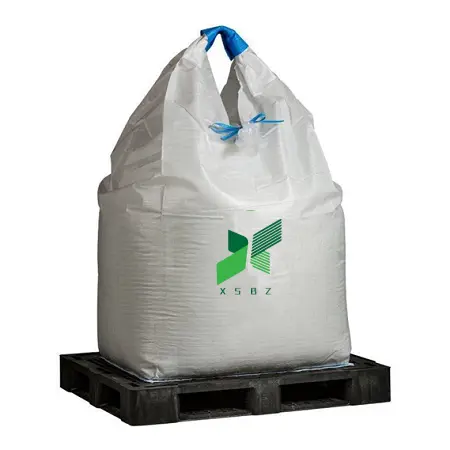
How is the Webbing for Lifting Loops Manufactured?
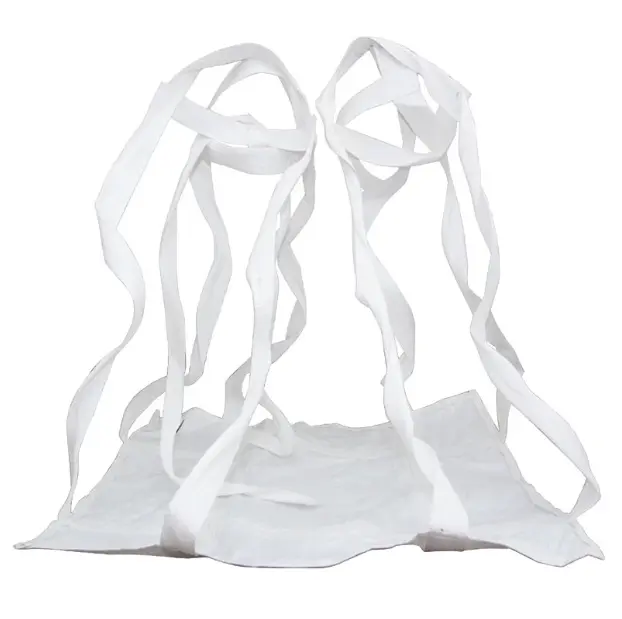
The lifting loops are arguably the most critical safety feature of any FIBC. They are the connection point between a one-ton bag and the forklift or crane that will lift it. Their failure is not an option. That's why the webbing used to create these loops is manufactured with the same, if not greater, level of care as the main body fabric. The webbing is not cut from the main fabric; it is a separate, specially woven product.
The process is similar to weaving the main fabric but on a much smaller, more focused scale. We use a "needle loom" to weave extremely strong, narrow bands of polypropylene tape. This process creates a very dense and thick band with an incredibly high tensile strength. We produce webbing in various widths and strengths to match the Safe Working Load (SWL) of the bulk bag. For example, a standard 1000kg FIBC might use loops with a breaking strength of over 5000kg each, providing a 5:1 or 6:1 safety factor.
These webbing bands are then cut to the precise length needed for the loops. They are sewn into the seams of the FIBC bag in a way that distributes the stress of the load across the entire structure of the bag. The sewing patterns used to attach the loops are reinforced multiple times to ensure they never fail under load. These are the handle pieces of bulk bags, and their integrity is something we test relentlessly. When you're assessing a potential supplier, take a close look at the loop attachment points. The quality of the stitching here is a clear indicator of the overall quality of the bags are made.
What Quality Control Measures are Essential in FIBC Manufacturing?
For a procurement officer like Mark, who has experienced shipment delays and certificate issues, a supplier's quality control (QC) program is everything. A robust QC system isn't just about catching defects at the end; it's about preventing them at every stage of the manufacturing process of bulk bags. At our factory, quality control is a continuous loop of checks and balances.
Our QC process includes:
- Raw Material Inspection: Every batch of polypropylene resin is tested for melt flow index and other properties before it even enters the extruder.
- Tape and Fabric Testing: During extrusion and weaving, we regularly pull samples of tape and fabric. These are taken to our in-house lab and tested for tensile strength, elongation, and UV resistance using specialized equipment. This ensures the foundational material bags meet our high standards.
- In-Process Sewing Checks: Our QC inspectors patrol the sewing lines, randomly selecting bags to check for seam strength, correct stitch types, and dimensional accuracy. This catches any potential issues early.
- Loop Strength Testing: We have a dedicated rig to test the breaking strength of our webbing and the fully attached lifting loops. We pull them to destruction to verify their performance.
- Light Table Inspection: For food-grade or pharmaceutical FIBCs, each bag is inspected on a light table to check for any tiny holes, weaving flaws, or foreign matter inside the bag.
This comprehensive approach ensures that the bags undergo rigorous scrutiny from start to finish. It’s how we maintain our certifications, like ISO 21898, and build trust with our clients. We believe that transparency is key, and we welcome clients to visit our factory or arrange for third-party inspections. This commitment to quality control is how we ensure the bags are not just compliant, but truly reliable.
How are FIBCs Tested to Ensure Safety and Performance?
Certifications on a piece of paper are one thing; proving the performance of a bulk bag is another. That's why the final stage of quality assurance is destructive testing. This is where we confirm the Safe Working Load (SWL) of a particular FIBC design. International standards, like ISO 21898, mandate a series of rigorous tests that a bulk bag must pass to be certified.
The primary test is the Top Lift Test. A sample FIBC bulk bag is filled to its intended SWL and then lifted by its loops. The weight is then incrementally increased until the bag fails. To achieve a 5:1 safety factor, a bag rated for 1000kg must be able to withstand a load of at least 5000kg without breaking. This test is brutal but essential. It's the ultimate proof that the fabric, the seams, and the loops all work together as a system to handle the load safely. We conduct these tests for every new design and periodically for our standard products to ensure ongoing compliance.
Other tests may include:
- Drop Test: The bag is dropped from a specific height to simulate rough handling.
- Topple Test: The bag is tipped over to test its resistance to puncture and seam bursting.
- Righting Test: A toppled bag is lifted by two loops to see if it can be righted without damage.
Passing these tests is how we provide legitimate certifications. This is a direct answer to one of Mark's biggest pain points—certificate fraud. We maintain meticulous records of all our tests and are happy to share reports with our clients. This data-driven proof of performance provides peace of mind and is a hallmark of a reputable FIBC manufacturer. Our range of certified Type C anti-static bulk bags for flammable powders, for example, undergoes even more stringent testing to ensure electrostatic safety.
What is the Final Step: Inspection, Packing, and Shipping?
After a bulk bag has been cut, sewn, and passed all its in-process quality checks, it’s not quite ready to ship. The final step is a thorough visual inspection. Every bag is individually inspected one last time. Our inspectors look for any cosmetic flaws, uncut threads, or printing errors. They turn the bag inside out to ensure it's clean and free of any debris from the manufacturing floor. This final check is our last chance to guarantee that the product leaving our factory is perfect.
Once a bag passes the final inspection, it's carefully folded and compressed. We use a bale press to pack the bags tightly into bundles. This not only makes them easier to handle but also reduces their volume, which can significantly lower shipping costs for our international clients—a key consideration for a price-conscious buyer. The bales are then wrapped in polypropylene fabric for protection during transit and clearly labeled with the product type, quantity, and destination.
This is also the stage where we finalize all documentation. We prepare the bill of lading, the packing list, and the certificate of conformity. We understand that for international logistics, efficient communication and accurate paperwork are just as important as the product itself. We work closely with our shipping partners to ensure that our products, whether they are standard 1-ton jumbo bags or specialized container liners, arrive at their destination on time and in perfect condition, helping our clients like Mark avoid the costly delays that disrupt their supply chain.
As you can see, the step-by-step process of creating a FIBC, also known as flexible intermediate bulk containers, is a complex blend of heavy machinery, skilled craftsmanship, and relentless quality control. For anyone involved in the storage of various materials, understanding this journey is key to making informed purchasing decisions.
Key Takeaways to Remember:
- Quality Starts with Materials: The final strength of a bulk bag is determined by the quality of the virgin polypropylene and additives used at the very beginning.
- The Process Matters: Each step, from extrusion and weave to cutting and sewing, builds upon the last. A weakness in one area compromises the entire bag.
- Webbing is Critical: The lifting loops are a separate, highly engineered component. Always inspect their construction and attachment points.
- Testing is Non-Negotiable: Demand proof of performance. A reputable supplier will have no issue providing results from destructive tests that verify the bag's Safe Working Load (SWL).
- Transparency is Trust: A good manufacturing partner will be open about their processes, materials, and quality controls. They should welcome your questions and even your visit.
Post time: Aug-14-2025