Are you looking for a reliable, efficient, and cost-effective way to store and transport your bulk materials? Whether you’re in agriculture, mining, chemicals, or logistics, understanding the world of FIBC (Flexible Intermediate Bulk Container) jumbo bags is crucial. This comprehensive guide, drawing from my years of experience as Allen, a FIBC bag manufacturer in China, will walk you through everything you need to know. We’ll explore why these versatile bulk bags are a game-changer, how to choose the right FIBC for your needs, and what to look for in a quality supplier. This article is worth reading because it will empower you, like Mark Thompson, a savvy procurement officer from the USA, to make informed decisions, avoid common pitfalls, and optimize your supply chain with the best bulk packaging solutions.
What Exactly is an FIBC (Flexible Intermediate Bulk Container)?
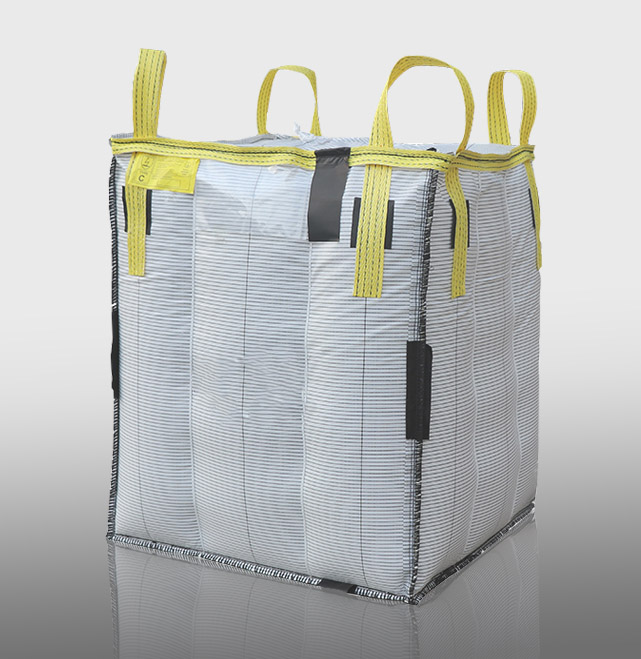
So, what’s all the buzz about FIBCs? You might have heard them called bulk bags, jumbo bags, big bags, or even by their full name, Flexible Intermediate Bulk Containers. Essentially, an FIBC is a large, industrial container made from flexible woven fabric – most commonly polypropylene – designed for storing and transporting dry, flowable products. Think of powders, granules, flakes, like sand, cement, fertilizers, seeds, or even food-grade items. The "intermediate" part of the name means they are designed to carry more than a sack or drum but less than a full bulk tanker.
These bags are designed to handle substantial weights, typically ranging from 500 kg to 2000 kg (about 1100 to 4400 pounds), though some can handle even more. One of the defining features of an FIBC bag is its lift loops (or straps), which allow for easy handling by forklifts, cranes, or hoists. This makes loading and unloading large quantities of material much simpler and faster compared to using many smaller bags. As a manufacturer, we’ve seen firsthand how switching to FIBCs can transform a company’s logistics. An FIBC bulk solution is more than just a bag; it’s a critical component in modern bulk material handling. These bags also known as jumbo bags ensures that your materials are contained safely and efficiently.
The construction of these bags are strong and engineered for durability. The woven polypropylene material provides excellent tensile strength and resistance to tearing, which is vital when you store and transport valuable or hazardous materials. We often get questions from customers like Mark about the reusability of these bags. While some FIBCs are designed for single use (with a Safety Factor of 5:1), many are built for multiple uses (Safety Factor of 6:1 or higher), provided they pass inspection before each reuse. This versatility is a key reason why the FIBC has become such a popular packaging solution.
Why are FIBC Bulk Bags Revolutionizing Material Handling?
The adoption of FIBC bulk bags has truly revolutionized how industries store and transport bulk materials. Before FIBCs became widespread, companies often relied on smaller sacks, drums, or rigid IBCs, which could be labor-intensive, time-consuming, and less space-efficient. A single FIBC jumbo bag can replace dozens of smaller bags, drastically reducing handling time, labor costs, and the risk of spillage or contamination.
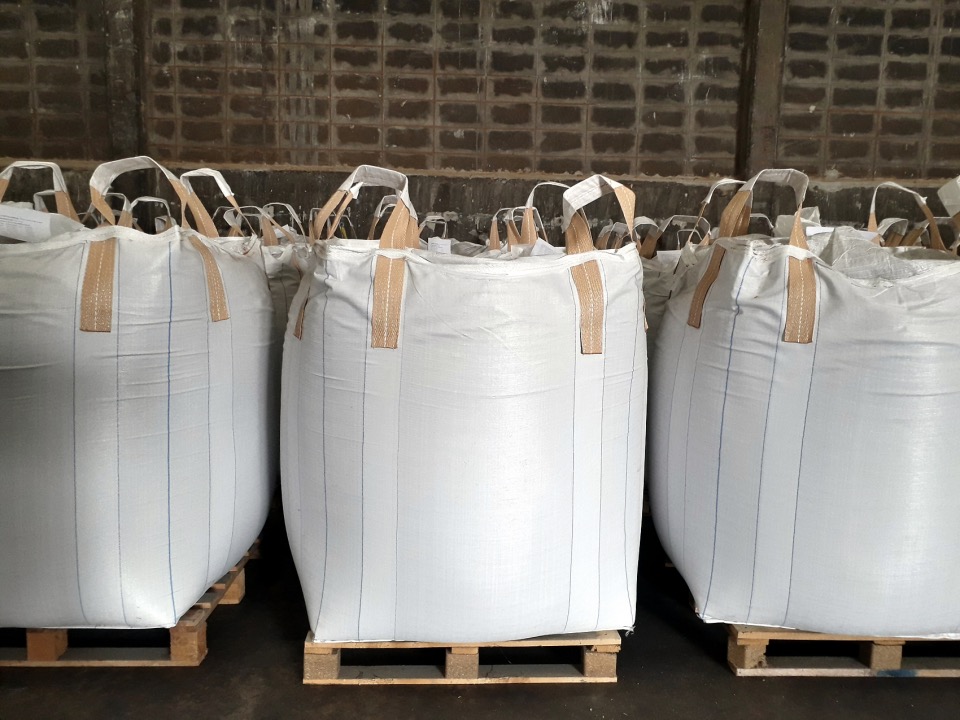
One of the biggest advantages is efficiency. Imagine the time saved when a forklift can move a ton of product in a single bulk bag lift, compared to manually handling 40-50 smaller sacks. This efficiency extends to storage as well. Empty FIBCs are lightweight and fold flat, taking up minimal warehouse space. When filled, their cubic shape often allows for better space utilization in trucks, containers, and warehouses compared to irregularly shaped smaller packages. This optimized transportation and storage translates directly into cost savings.
Furthermore, FIBCs contribute to a safer working environment. Manual handling of heavy sacks can lead to worker injuries. By mechanizing the lifting and moving process with FIBCs, companies can reduce these risks. The bags are designed with specific lift loops that integrate seamlessly with standard handling equipment. For businesses dealing with fine powders, FIBCs also help minimize dust, leading to cleaner air and less product loss. The ability to transporting and storing bulk materials with greater ease and safety is a hallmark of why these bags are becoming so prevalent.
Understanding the Anatomy of a High-Quality FIBC Jumbo Bag
When you’re looking for FIBC solutions, it’s helpful to understand what makes up a quality jumbo bag. It’s not just a simple sack; a lot of engineering goes into its design to ensure it can safely handle heavy loads. The primary material is typically woven polypropylene fabric. This fabric is created by weaving individual polypropylene tapes together, resulting in a material that is strong, flexible, and resistant to tearing. The weight and weave of this fabric are critical to the bag’s Safe Working Load (SWL) and Safety Factor (SF).
Key components of an FIBC bulk bag include:
- Body Fabric: As mentioned, this is usually UV-stabilized woven polypropylene. UV stabilization is crucial if the bags are stored outdoors, as prolonged exposure to sunlight can degrade the plastic.
- Lift Loops: These are strong straps, typically made from the same polypropylene material but often a heavier weave, sewn into the corners or sides of the FIBC. Common configurations include 1, 2, or 4 lift loops. The way these loops are attached is critical for the bag’s strength.
- Top and Bottom Construction: FIBCs come with various filling and discharging options.
- Tops: Open top, spout top (for easy filling), duffle top (provides a wider opening that can be closed), or flap top.
- Bottoms: Flat bottom (for single use or when the bag is cut to empty), spout bottom (for controlled discharge), or full drop bottom.
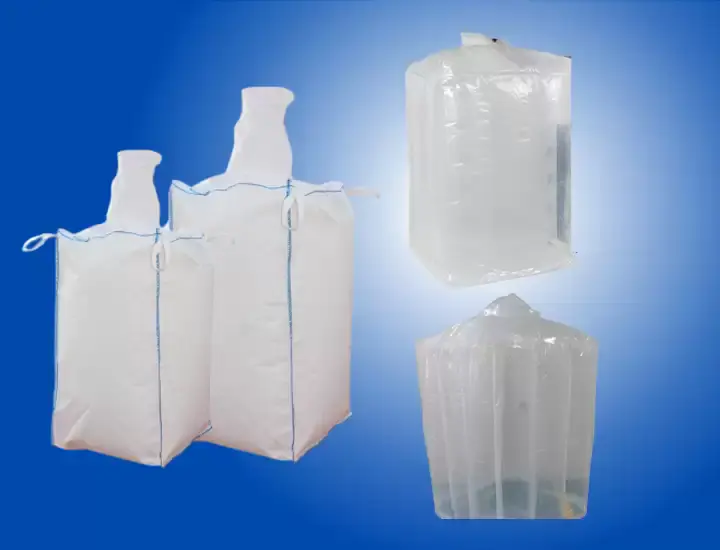
- Liners (Optional): For very fine powders, hygroscopic materials, or food-grade applications, an inner liner (often made of polyethylene) can be inserted into the FIBC bag. These bags act as a barrier against moisture and contamination and can prevent siftage of fine particles.
- Seams and Stitching: The quality of the stitching is paramount. Strong, specialized stitches like chain stitch or overlock stitch are used, often with filler cord to prevent leakage of fine powders.
A well-manufactured FIBC will have consistent fabric weight, strong seam integrity, and securely attached lift loops. As a factory owner, I always emphasize to my team that every stitch counts. For customers like Mark, understanding these components helps in specifying the right FIBC and in quality assessment. The durability of the FIBC jumbo depends heavily on these construction details.
What are the Different Types of FIBC Bags Available?
Not all FIBCs are created equal, and there are several types of FIBC jumbo bags designed for different applications and materials. Choosing the correct type is essential for safety and efficiency. Here’s a quick rundown of the main categories, often classified by their electrostatic properties:
- Type A FIBC: These are your standard FIBC bags made from plain woven polypropylene without any special electrostatic protection. They are suitable for transporting non-flammable products in environments where no flammable solvents or gases are present. These bags are ideal for many common bulk materials.
- Type B FIBC: Similar to Type A, Type B FIBCs are also made from standard polypropylene fabric. However, the fabric has a lower breakdown voltage (less than 6 kV). This helps prevent the occurrence of propagating brush discharges, which can ignite flammable dust clouds. Type B bags are used for dry, combustible powders, but there should be no flammable gases or vapors present.
- Type C FIBC (Conductive FIBC): These FIBCs, also known as groundable FIBCs, are made from woven fabric with interwoven conductive threads or tapes. These conductive elements must be electrically interconnected and grounded during filling and emptying. Type C bags are designed for use when transporting flammable powders or when flammable solvents or gases are present in the vicinity of the bag. Proper grounding is absolutely critical for safety. If you’re handling potentially explosive materials, Type C conductive FIBC bags are often the required packaging solution.
- Type D FIBC (Anti-static/Static Dissipative FIBC): These FIBCs are made from special anti-static fabric with static dissipative properties. They do not require grounding. The fabric is designed to safely dissipate static charge into the atmosphere via corona discharge, preventing sparks. Type D bags can be used for flammable materials and in environments where combustible dusts or flammable gases/vapors are present.
Beyond these electrostatic types, FIBCs also vary by construction style:
- U-Panel: Constructed from three body panels – one forming the bottom and two sides ("U" shape), with the other two sides sewn on.
- Circular/Tubular: Woven on a circular loom, resulting in a seamless body. This design is good for fine materials as it has no side seams.
- Four-Panel: Made from four separate fabric pieces sewn together to form a square or rectangular shape.
- Baffle Bags (Q-Bags): These FIBCs have internal baffles (fabric panels sewn across the corners) that help the bag maintain its square shape when filled. This improves stability and storage efficiency, often by up to 30%.
Understanding these types of FIBC jumbo bags helps you choose the safest and most efficient option for your product and handling environment.
How Do You Choose the Right FIBC for Your Specific Needs?
Selecting the right FIBC is more than just picking a bag; it’s about finding a packaging solution that fits your product, your processes, and your safety requirements. Here are some key factors I always discuss with customers like Mark to help them make the best choice:
-
Product Characteristics:
- Material: What are you packaging? Is it a powder, granule, or flake? Its density will determine the bag size needed for a specific weight.
- Flowability: Does it flow easily, or does it tend to bridge or cake? This can influence the choice of discharge spout.
- Food Grade/Pharma Grade: If your product is for human or animal consumption, or pharmaceutical use, you’ll need FIBCs made in a certified clean environment from virgin polypropylene resin, often with specific liners.
- Hazardous Materials: If you’re handling hazardous materials, you’ll need UN-certified FIBCs, which undergo rigorous testing.
- Flammability/Static Concerns: As discussed in the previous section, the electrostatic properties of your product and the handling environment will dictate whether you need Type A, B, C, or D FIBCs.
-
Safe Working Load (SWL) and Size:
- How much weight do you need each FIBC jumbo bag to carry? This is the SWL. Don’t try to overfill a bag beyond its rated capacity.
- What are the dimensions of your storage space, shipping containers, or transport vehicles? The FIBC dimensions (width, depth, height) should optimize this space. Baffle bags are often preferred for their space efficiency.
-
Filling and Discharging Methods:
- Filling: How will you fill the bags? Do you need a wide opening (open top, duffle top) or a more controlled fill (spout top)?
- Discharging: How will you empty the bags? A discharge spout offers controlled emptying. For some applications, a flat bottom that is cut open is sufficient. Consider the need for features like remote-release bottoms for enhanced safety.
- Consider investing in versatile options like these versatile 1 Ton Jumbo FIBC Liner Bags if you handle a variety of materials.
-
Handling Equipment:
- What equipment do you have (forklifts, cranes)? This will influence the type and number of lift loops needed. Standard FIBCs have four loops, but two-loop or single-loop FIBCs are also available for specific handling systems. For instance, some operations are optimized for robust two loop big bags.
-
Storage and Transportation Environment:
- Will the bags be stored indoors or outdoors? If outdoors, UV protection is essential to prevent degradation from prolonged exposure to sunlight.
- What are the climatic conditions (humidity, temperature)? This might necessitate liners to protect against moisture or mold growth.
By carefully considering these factors, you can ensure you select an FIBC bulk bag that is safe, efficient, and cost-effective for your application. Don’t hesitate to consult with experienced suppliers; we can guide you through the options.
Key Safety Considerations When Using FIBCs to Store and Transport Materials
Safety is paramount when handling FIBCs, especially given the large quantities of material they contain. While FIBCs are designed for safety, improper use can lead to accidents. As a responsible manufacturer, we always emphasize adherence to safe handling practices.
Here are some crucial safety points for using FIBCs:
- Inspect Before Use: Always inspect an FIBC bag for any damage – cuts, tears, frayed lift loops, or damaged stitching – before filling it. This is especially important for multi-trip FIBCs. Never use a damaged FIBC.
- Correct SWL: Never exceed the Safe Working Load (SWL) specified on the FIBC label. Overloading can cause the bulk bag to fail, leading to spillage and potential injury.
- Proper Lifting:
- Ensure all lift loops are used and are vertical, without twisting or bunching.
- Use forklift tines that are smooth and rounded to avoid damaging the loops. Protective sleeves can also be used.
- Lift the FIBC smoothly, without jerking.
- Never allow personnel to stand under a suspended FIBC.
- Stacking: If FIBCs are designed for stacking (check the label), ensure they are stacked on a level, stable surface, and according to the manufacturer’s recommendations. Pyramidal stacking is often advised. Poorly stacked FIBCs can topple.
- Grounding (for Type C FIBCs): If you are using Type C conductive FIBCs for flammable or combustible materials, ensure they are properly grounded before and during filling and emptying. A single ungrounded Type C FIBC bag can accumulate enough static charge to cause an ignition.
- Discharging: When emptying an FIBC, use a controlled method. If a discharge spout is present, open it carefully. Never stand directly beneath the FIBC while it’s discharging. Some bags feature remote opening systems for enhanced safety.
- UV Exposure: While many FIBCs have UV inhibitors, prolonged exposure to sunlight can still weaken the polypropylene fabric over time. If possible, store FIBCs (filled or empty) under cover.
- Training: Ensure all personnel involved in handling FIBCs are properly trained on safe procedures. This includes understanding the information on the FIBC label.
Following these guidelines when you store and transport materials in FIBCs ensures that the bags perform as intended and helps maintain a safe working environment. The design of a standard FIBC already incorporates many safety features, but user diligence is key.
What Makes an FIBC a Cost-Effective Packaging Solution for Bulk Materials?
For procurement officers like Mark, who are quality-sensitive but also seek competitive pricing, the cost-effectiveness of FIBCs is a major draw. And it’s true – FIBC jumbo bags offer significant economic advantages over other packaging materials for bulk material handling.
Firstly, FIBCs reduce labor costs. As mentioned, one person with a forklift can handle a ton of material in an FIBC, compared to the manual labor required for many smaller sacks. This translates to faster loading/unloading times and fewer person-hours. Secondly, packaging materials costs per unit of product are often lower with FIBCs. While a single FIBC bag might cost more than a single small sack, it holds vastly more product. When you calculate cost per kilogram or pound of product packaged, FIBCs are often the more economical choice.
Thirdly, FIBCs optimize transportation and storage. Their cubic shape when filled (especially baffle bags) allows for efficient use of space in trucks and shipping containers, potentially reducing freight costs. Empty FIBCs fold flat, requiring minimal storage space and reducing the cost of shipping empty packaging. Furthermore, the durability of FIBCs means less product loss due to damaged packaging during storage and transportation. Reduced spillage also means less wasted product and cleanup costs. For certain applications, multi-trip FIBCs can further enhance cost savings, as the bag can be reused multiple times, amortizing its initial cost over several uses. This makes a standard bulk bag a very attractive option.
Finally, by streamlining the supply chain – from filling at the producer’s end to discharging at the end-user’s facility – FIBCs can lead to overall operational efficiencies that contribute to a better bottom line. This cost-effective solution is a key reason why industries worldwide are increasingly adopting FIBC bulk packaging.
The Importance of Quality and Certifications in FIBC Jumbo Bags
When you’re entrusting valuable, sometimes hazardous, materials to an FIBC, quality is non-negotiable. As a factory owner exporting to markets like the USA, North America, Europe, and Australia, I know that quality inspection and certifications are top concerns for customers like Mark. And rightly so! A poorly made FIBC bulk bag can lead to product loss, contamination, environmental damage, and even serious safety incidents.
What defines a quality FIBC?
- High-Grade Materials: It starts with using 100% virgin polypropylene resin. Recycled materials can compromise strength and durability, and are unsuitable for food-grade or pharmaceutical applications. The polypropylene fabric must be of consistent weight and weave, with adequate UV protection if required.
- Precision Manufacturing: The cutting, sewing, and attachment of lift loops must be precise and strong. Seams should be sift-proof if handling fine powders.
- Rigorous Testing: Reputable manufacturers conduct extensive testing on their FIBCs. This includes top lift tests, tear tests, drop tests, and cyclic load tests to ensure the bags can withstand the specified Safe Working Load (SWL) with the required Safety Factor (e.g., 5:1 for single-trip, 6:1 for multi-trip).
- Traceability: Good manufacturers have traceability systems, allowing them to track a batch of FIBCs back to the raw materials and production processes used.
Certifications play a crucial role in verifying quality and safety. Look for:
- ISO 9001:2015: This indicates the manufacturer has a quality management system in place.
- ISO 21898: This is the specific international standard for FIBCs for non-dangerous goods. It outlines design, performance, and testing requirements.
- UN Certification: If you are transporting and storing dangerous goods, the FIBCs must be UN certified. This involves stringent testing by an independent, authorized body. The UN marking on the FIBC provides details about its testing and approved use.
- Food Grade Certifications (e.g., BRC, AIB, FSSC 22000): If the FIBCs are for food products, they should be manufactured in a facility that meets recognized food safety standards. This includes measures to prevent contamination and ensure hygiene.
Unfortunately, certificate fraud can be an issue. Mark’s concern about this is valid. My advice is to always verify certifications. You can ask for copies of certificates and even check their validity with the issuing bodies. Working with established, reputable suppliers who are transparent about their quality processes and certifications is key. We, for instance, welcome audits and are proud of our seven production lines that adhere to these high standards. For those seeking a reliable standard FIBC bulk bag, looking into the supplier’s credentials is time well spent.
Can FIBC Bags Be Customized for Unique Applications?
Absolutely! One of the great strengths of FIBCs is their customizability. While there are standard bulk bag sizes and designs, many applications require tailored solutions. As a manufacturer, a significant portion of our work involves creating custom FIBC jumbo bags to meet specific client needs. For industries ranging from agriculture and mining to chemicals and food processing, custom bags ensure optimal performance and efficiency.
What aspects of an FIBC can be customized?
- Dimensions: The length, width, and height can be adjusted to fit your product density, desired weight, handling equipment, and transport/storage constraints.
- SWL and Safety Factor: We can design FIBCs for specific Safe Working Loads (e.g., 500kg, 1000kg, 1500kg, 2000kg) and Safety Factors (e.g., 5:1 for single-trip, 6:1 or 8:1 for heavy-duty multi-trip).
- Fabric Weight and Color: The fabric weight can be varied for different strength requirements. While white is standard, FIBCs can be made in other colors, or with colored stitching or loops for identification.
- Top and Bottom Features: A wide array of filling and discharge options can be incorporated:
- Tops: Spout top (various diameters and lengths), duffle top, open top, cone top (for slow-flowing materials), flap top.
- Bottoms: Spout bottom (various types like star-cut, iris, pajama closure for better control), flat bottom, full-drop bottom, remote discharge systems.
- Lift Loops: Number of loops (1, 2, 4), loop height, loop material, reinforced loops, stevedore straps (for one-sided forklift access).
- Liners: Various types of PE liners (gusseted, form-fit, baffle liners, foil liners for oxygen/moisture barrier, conductive liners). Liners can be loosely inserted, tabbed, or glued in. Consider options like durable PP woven container liners for added protection inside shipping containers.
- Printing: FIBCs can be printed with company logos, product information, handling instructions, or UN markings, typically up to 4 colors.
- Special Features: Document pouches, B-Locks or cord-locks for spouts, sift-proof seams, breathable fabric (for products like potatoes or logs), baffled construction for shape retention.
The process of customizing an FIBC usually involves a detailed discussion with the client to understand their product, handling processes, and any specific challenges. We often provide samples for testing before full production. This collaborative approach ensures that the bags are perfectly suited for the intended application, maximizing efficiency and safety. If you are looking for FIBC solutions tailored to your unique needs, don’t hesitate to ask about customization.
Future Trends: What’s Next for FIBC Bulk Packaging Solutions?
The FIBC industry is not static; it’s continually evolving to meet new challenges and demands. As we look to the future, several trends are shaping the development of FIBC bulk packaging solutions. These innovations aim to enhance sustainability, safety, and efficiency.
- Sustainability: There’s a growing demand for more sustainable FIBCs. This includes:
- Increased use of recycled content: While virgin polypropylene is crucial for strength and food safety, research is ongoing to incorporate higher percentages of recycled PP in non-food grade FIBCs without compromising performance.
- Design for disassembly and recycling: Making FIBCs easier to recycle at the end of their life. This involves exploring mono-material designs or easier separation of components like liners.
- Closed-loop systems: More companies are implementing programs to collect, clean, and reuse or recycle their FIBCs, reducing waste.
- Smart FIBCs: The integration of technology is on the horizon. This could include:
- RFID tags or QR codes: For better tracking and traceability throughout the supply chain, inventory management, and verifying authenticity.
- Sensors: Potentially to monitor conditions inside the FIBC bag, such as temperature or humidity, for sensitive products.
- Enhanced Safety Features: Continuous improvement in safety is always a priority. This includes developing:
- More robust designs for hazardous materials.
- Improved anti-static technologies for Type D FIBCs.
- Easier and safer remote opening systems for discharge.
- Automation: Increased automation in filling, handling, and emptying FIBCs will drive demand for bags that are perfectly compatible with these automated systems. This includes precise dimensions and consistent loop placement.
- Specialized Liners: Development of advanced liners offering better barrier properties (oxygen, moisture, aroma), anti-microbial features, or enhanced strength will continue. This helps in bags for storing even more sensitive or demanding products.
As a manufacturer, we at XSBulkBag are actively engaged in exploring these trends. Our commitment to innovation means we are always looking for ways to improve our FIBCs and provide our customers, from agriculture to chemical manufacturing, with the most advanced and effective bags to store and transport their bulk materials. The FIBC jumbo of tomorrow will be even smarter, safer, and more sustainable.
Key Takeaways: Your FIBC Checklist
To wrap up this extensive guide on FIBC jumbo bags, here are the most important things to remember as you navigate your bulk packaging solutions:
- Understand Your Product: The nature of your material (density, flow, static risk, food-grade needs) is the primary driver for FIBC selection.
- Safety First: Always prioritize safety. Use the correct FIBC type, never exceed the SWL, and follow safe handling procedures.
- Quality Matters: Choose suppliers who use high-quality virgin polypropylene, have robust manufacturing processes, and can provide genuine certifications (ISO, UN, food-grade).
- Customization is Key: Don’t settle for a one-size-fits-all solution. FIBCs can be customized extensively to meet your specific needs.
- Cost-Effectiveness: FIBCs offer significant cost savings in labor, transport, and storage when correctly implemented.
- Types of FIBCs: Familiarize yourself with Type A, B, C, and D FIBCs to ensure you’re using the right bag for electrostatic safety.
- Construction Details: Pay attention to fabric weight, lift loops, seam construction, and filling/discharge features.
- Supplier Relationship: Work with experienced and communicative suppliers who can guide you and address your concerns, especially regarding logistics and quality assurance. Mark Thompson’s pain points with communication and delays can often be mitigated by choosing a reliable partner.
I hope this guide, infused with my experience as Allen from China, has been insightful. The world of FIBCs, bulk bags, and jumbo bags is vast, but with the right knowledge, you can make choices that significantly benefit your operations. If you’re looking for FIBC solutions to store and transport your materials, we’re here to help.
Post time: May-13-2025