Polypropylene (PP) woven bags are the unsung heroes of global commerce, responsible for safely transporting everything from grain and fertilizer to chemical powders and construction materials. But what makes one woven bag robust enough for heavy-duty mining applications while another is better suited for agricultural produce? The secret is in the fabric's DNA: the weave. Specifically, the weave density is the critical factor that dictates the bag's strength, durability, and overall performance.
For procurement managers and business owners, understanding the nuances of pp woven fabric is not just a technical detail—it's a crucial piece of knowledge for making smart, cost-effective purchasing decisions. This guide will take you deep into the world of pp woven materials. We will explore how the density of the weave directly impacts the mechanical properties of a woven bag, ensuring you can select the perfect packaging solution that won't let you down.
What Exactly is a PP Woven Bag?
A PP woven bag, at its core, is a packaging solution made from a remarkable material: woven polypropylene. Polypropylene itself is a tough, semi-rigid, and crystalline thermoplastic polymer. Think of it as a type of plastic that becomes pliable when heated and solidifies upon cooling, making it perfect for manufacturing. To create a pp woven fabric, we don't just mold this plastic; we transform it into thousands of strong, thin tapes or threads.
These threads are then woven together, much like traditional textiles, creating an incredibly resilient fabric structure. The process of interlacing these threads in two perpendicular directions—known as the warp (longitudinal threads) and weft (lateral threads)—is what gives the material its name and its signature strength. Unlike flimsy single-use plastic bags, a pp woven bag is a durable material designed for reuse and to withstand significant stress, making it an indispensable tool in logistics, agriculture, and industry.
These bags are prized for their durability and flexibility. The weave creates a lightweight yet strong material that is resistant to tearing, punctures, and stretching. This unique combination of properties makes pp woven bags ideal for holding bulk quantities of goods, from fine powders that require a tight weave to prevent leakage, to coarse aggregates that demand high tensile strength.
How is PP Woven Fabric Made? The Weaving Process Explained
As a factory owner with seven production lines dedicated to these products, I've overseen this process countless times. It’s a fascinating blend of polymer science and mechanical engineering that turns a simple raw material into a high-performance packaging product. The journey of a pp woven bag begins with polypropylene resin pellets.
The creation of pp woven fabric involves a few key stages:
- Extrusion: The polypropylene resin, often mixed with additives for UV protection or color, is melted down in an extruder. This molten polymer is then forced through a die to form a thin, continuous sheet of plastic film.
- Slitting: This film is immediately cut by precision blades into very thin tapes. The width and thickness of these tapes are carefully controlled, as they are the foundational building blocks of the final woven fabrics. The quality of this step directly impacts the final tensile strength of the fabric.
- Stretching and Annealing: The tapes are stretched, a process that aligns the polymer molecules and significantly increases their strength. They are then passed through a heated chamber to anneal them, which locks in this strength and prevents them from shrinking.
- Weaving: This is where the magic happens. The strengthened tapes are wound onto bobbins and loaded onto a circular loom. The weaving process interlaces the warp and weft tapes at high speed, forming a continuous tube of pp woven fabric. The settings on this loom determine the crucial weave density.
This continuous tube of fabric is then ready for the final stages: printing (if required), cutting to size, and sewing to create the finished woven bag. Every step is monitored to ensure the final product meets the required specifications for strength and durability.
What is Weave Density in PP Woven Fabrics?
Weave density is one of the most important technical specifications of a pp woven fabric. It refers to the number of polypropylene tapes (or threads) packed into a specific area of the fabric. It is typically measured by counting the number of warp threads and weft threads per square inch or per 10 cm x 10 cm square. You might see it expressed as "10x10," meaning 10 warp threads and 10 weft threads per square inch.
The density of the weave is directly related to another key metric: fabric weight, often measured in GSM (Grams per Square Meter). A fabric with a higher density will have more threads packed into the same area, making it heavier and more robust. A higher weaving density typically results in a higher GSM. For example, a light-duty bag might have a weave of 8x8 and a GSM of 60, while a heavy-duty bag for industrial minerals might have a weave of 14x14 and a GSM of 200 or more.
Here's a simple breakdown of how weave density can be categorized:
| Weave Density (Threads per inch) | Typical GSM Range | Common Applications |
|---|---|---|
| Low (e.g., 8x8 - 10x10) | 60 - 90 | Agricultural products (grains, animal feed), sandbags, waste collection. |
| Medium (e.g., 11x11 - 12x12) | 90 - 140 | Chemicals, fertilizer, seeds, standard bulk bags. |
| High (e.g., 13x13 - 15x15) | 140 - 220 | Fine powders (cement, flour), minerals, chemicals requiring high containment, heavy-duty packaging. |
Understanding this measurement is crucial. When a client specifies their load capacity requirement, one of the first things we determine is the appropriate weave density needed to safely handle that weight. It's the foundation upon which the bag's performance is built.
How Does Weave Density Affect the Strength of PP Woven Bags?
The relationship between weave density and the strength of pp woven bags is direct and significant. A tighter weave, meaning a higher density of threads per unit area, fundamentally creates stronger and more durable woven fabrics. This is because the forces applied to the bag are distributed across a greater number of threads, reducing the stress on any single one.
A higher density weave improves several key mechanical properties:
- High Tensile Strength: This is the fabric's ability to resist being pulled apart. More threads per inch mean the fabric can withstand greater tension before it tears. This is critical for the lifting loops and the main body of bulk bags that need to support heavy loads of up to two tons.
- Impact Strength: This refers to the bag's ability to survive drops and rough handling. A tightly woven fabric is less likely to puncture or burst upon impact because the dense structure provides better resistance to sharp objects and sudden forces.
- Dimensional Stability: A higher weave density makes the fabric more stable and less prone to stretching or deforming under load. This ensures the bag maintains its shape, which is important for stacking and transportation.
From my experience in manufacturing, I can tell you that even a small increase in the weave count, for example from 10x10 to 11x11, can result in a noticeable improvement in bag performance and durability. This is why for applications involving valuable or hazardous materials, we always recommend a pp woven fabric with a higher density. It provides that extra margin of safety and reliability that customers, especially those in the USA and Europe, demand.
Beyond Strength: What Other Properties Does Weave Density Impact?
While the link between weave density and strength is paramount, this single characteristic also affects the strength and other vital properties of a pp woven bag. These secondary effects are often just as important depending on the specific application. A procurement officer knowledgeable about these nuances can make much better choices.
One major property influenced by the weave is permeability. A fabric with a lower density has larger gaps between the threads, allowing more air and moisture to pass through. This can be beneficial for products like potatoes or onions that need to breathe. Conversely, a higher density weave results in a less permeable fabric, which is essential for packaging fine powders like cement or flour that would otherwise sift through the material. For applications requiring a near-perfect barrier, a coating or a separate PE liner is used, but the base fabric's weave is the first line of defense.
Another area is printability. A smoother, more uniform surface is required for high-quality, detailed printing. Tightly woven fabrics provide this ideal canvas. When customers require sophisticated branding, often using a BOPP (Biaxially Oriented Polypropylene) film laminated to the bag, a high-density pp woven fabric ensures the lamination adheres perfectly and the final graphic is crisp and professional. A loose weave can result in a rough, uneven surface that compromises both the print quality and the lamination's integrity.
PP Woven vs. Non-Woven Bags: What's the Real Difference?
It's a common point of confusion for buyers, but the distinction between pp woven and non-woven materials is fundamental. The difference lies entirely in the manufacturing process and results in vastly different properties and applications. Knowing this helps you choose the appropriate material for your needs.
PP Woven Bags:
- Manufacturing: Made from woven polypropylene tapes interlaced in a traditional crisscross pattern (warp and weft).
- Strength: The weave structure gives them superior strength and durability compared to their non-woven counterparts. They have exceptionally high tensile strength.
- Durability: They are designed for heavy-duty use and can often be reused multiple times.
- Applications: Ideal for heavy-duty packaging, bulk bags, industrial bulk bags for agriculture, sandbags, and packaging for grains, chemicals, and minerals.
Non-Woven Bags:
- Manufacturing: Made from woven polypropylene? No, that's the key mistake. Non-woven fabric is created by bonding or felting fibers together using heat, chemicals, or pressure. There is no weave at all.
- Strength: They are significantly less strong than woven fabrics. They are not suitable for carrying heavy loads.
- Durability: Best suited for limited or single-use applications.
- Applications: Commonly used for promotional tote bags, shopping bags, and packaging for light items like clothing or gifts.
In short, if your application involves anything more than a few kilograms, you need a woven bag. The structural integrity provided by the weave is essential for any task that requires genuine strength and reliability. We often get inquiries from potential clients trying to cut costs by considering non-woven bags for bulk items, and we always advise against it. It's a recipe for product loss and failure.
How Do You Choose the Right Weave Density for Your Application?
Choosing the correct weave density is a balancing act between performance requirements and cost. A higher density pp woven fabric uses more raw material and takes longer to produce, making it more expensive. Therefore, the goal is to select a weave that is robust enough for the job without over-engineering the solution.
Here are some key considerations to guide your choice:
- Product Weight and Density: This is the most critical factor. The heavier and denser your product (e.g., metal ores vs. animal feed), the higher the weave density you will need to ensure the woven bag has the necessary strength and durability.
- Product Particle Size: For fine powders like pigments or cement, a tightly woven fabric is a must to prevent product sifting. A higher density weave minimizes the gaps between threads, providing better containment. For larger items like construction debris, a lower density may suffice.
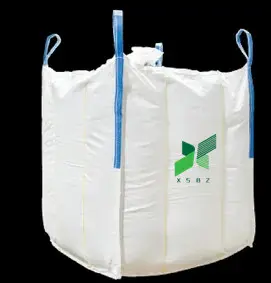
- Handling and Transportation: Consider how the bags will be handled. If they will be subject to rough handling, multiple lifts, or long-distance shipping, a more durable, higher-density weave is a wise investment. Products like our two loop big bags are designed with specific handling methods in mind, and their fabric strength is tailored accordingly.
- Requirement for Breathability: As mentioned, some agricultural products require airflow to prevent spoilage. In these cases, a slightly lower density weave is intentionally chosen.
I often advise clients like Mark, who procure bags for various industries, to create a specification sheet for each product they package. This sheet should detail the product's weight, particle size, and handling requirements, which then allows us to recommend the most cost-effective and safe pp woven specification.
Why are Polypropylene Woven Bags the Go-To for Heavy-Duty Packaging?
Polypropylene woven bags have become the industry standard for heavy-duty packaging for a collection of compelling reasons, all stemming from the inherent properties of pp and the strength of the weave structure. Their dominance in sectors like mining, chemicals, and agriculture is no accident.
The primary reason is their incredible strength-to-weight ratio. A pp woven bag that weighs only a few kilograms can safely carry a ton or more of material. This efficiency is a direct result of the high tensile strength imparted by the stretching and weaving of the polypropylene tapes. Furthermore, the material offers excellent resistance to moisture and chemical corrosion. Unlike natural fibers, polypropylene does not rot or degrade when exposed to damp conditions, and it is inert to most acids and alkalis, protecting the contents and the bag itself.
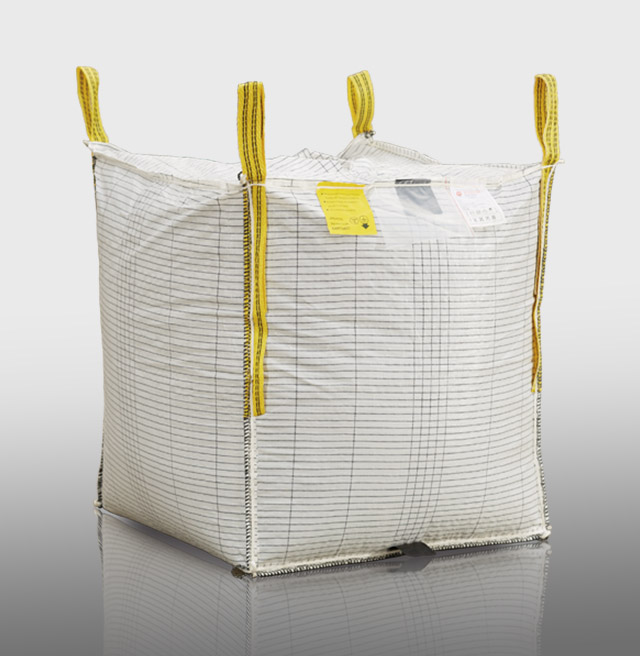
Their durability is another key factor. They can withstand the drops, scrapes, and stresses of transportation and storage that would shred lesser packaging. For specialized needs, such as transporting flammable powders, the pp woven fabric can be engineered with conductive threads to create products like Type C conductive FIBC bags, which safely dissipate static electricity. This adaptability, combined with their cost-effectiveness, makes them an unbeatable choice for almost any bulk material handling challenge.
What Quality Control Measures Ensure Optimal Bag Performance?
For a buyer concerned about quality and supplier reliability, understanding the manufacturer's quality control (QC) process is non-negotiable. At my facility, we have implemented a multi-stage QC system to ensure every woven bag meets international standards and our customers' exact specifications. This is how we prevent issues like inconsistent strength or certificate fraud.
Our process starts with the raw material. We test every batch of polypropylene resin for melt flow index and purity. Using a substandard raw material is the fastest way to produce a weak pp fabric. During the weaving process, our looms are continuously monitored by sensors and technicians to ensure a consistent weave density across the entire fabric roll. We pull samples regularly to manually count the weave and check the fabric's GSM.
Once the fabric is made, we conduct rigorous physical tests.
- Tensile Strength Testing: Strips of fabric are placed in a machine that pulls them until they break. This measures the exact force the weave can withstand, ensuring it meets the required specification.
- Drop Testing: Finished bags, filled to their safe working load, are dropped from various heights to test their impact strength and the integrity of the seams.
- UV Resistance Testing: For bags intended for outdoor use, we expose fabric samples to intense UV light in a weatherometer to simulate prolonged sun exposure and ensure they won't degrade prematurely.
This comprehensive approach to quality control ensures consistent quality and gives our clients peace of mind. They know that the performance of pp woven bags they receive has been verified at every step of production.
The Future of PP Woven Technology: Innovations on the Horizon
The world of pp woven packaging solutions is not static. While the fundamental concept of the weave remains, innovation continues to push the boundaries of what these bags can do. As manufacturers, we are constantly exploring new materials and techniques to improve performance, sustainability, and functionality.
One of the key areas of development is in creating lighter yet stronger woven fabrics. By using advanced polymer blends and more efficient extrusion and stretching techniques, we can produce pp woven fabric with higher tensile strength at a lower GSM. This reduces material usage, lowers transportation costs, and improves the environmental footprint of the packaging. We are also seeing advancements in coatings and liners, such as improved barrier films that offer better protection against oxygen and moisture for sensitive food-grade products, often found in specialized PP woven container liners.
Another exciting frontier is the integration of "smart" technology. This could include RFID tags embedded in the weave for enhanced tracking and inventory management or color-changing indicators that react to temperature or moisture, providing a visual cue about the condition of the contents. The focus is on making the humble woven bag a more intelligent part of the supply chain. As we move forward, the emphasis will continue to be on creating more efficient, more sustainable, and more reliable packaging solutions for our global partners.
Key Takeaways
- Weave Density is Critical: It is the number of threads per square inch and directly determines the strength, durability, and weight (GSM) of a pp woven fabric.
- Higher Density = Higher Strength: A tighter weave distributes force across more threads, resulting in higher tensile strength and better resistance to punctures and impacts.
- It's More Than Just Strength: The density of the weave also affects the fabric's permeability (breathability) and the quality of printing and lamination.
- Woven is Not Non-Woven: PP woven bags are made from interlaced tapes and are incredibly strong. Non-woven bags are bonded fibers and are suitable only for light-duty applications.
- Choose Based on Application: Select your weave density based on the product's weight, particle size, and handling requirements to balance performance and cost.
- Quality Control is Key: A reputable manufacturer will have rigorous QC processes, from testing the raw material to strength-testing the final woven bag, to guarantee reliable performance.
Post time: Nov-12-2025