For procurement managers and logistics professionals, finding the perfect method to move massive quantities of materials is a relentless battle against gravity and costs. You cannot afford excuses when a delivery date is missed, nor can you tolerate a dangerous warehouse environment caused by failing materials. This is exactly why upgrading your bulk packaging strategy is absolutely non-negotiable. Using a high-quality FIBC bulk bag has revolutionized the way we handle heavy, granular materials worldwide.
In this comprehensive guide, we will explore why two loop FIBC bags are widely considered the most cost-effective and efficient system available today. You will discover the fundamental reasons to use this specific packaging solution to drastically improve your bag storage efficiency. Whether you need to store hygroscopic powders or manage complex fertilizer packaging protocols, understanding the nuances of an industrial FIBC bag will completely transform your operations. We will dive deep into why FIBC bulk handling is vastly superior to traditional small sacks, and how to master transport logistics in agriculture to ensure your bottom line is always protected. This article is worth reading because it gives you the exact technical blueprints to balance cost with uncompromising safety.
What exactly is a flexible intermediate bulk container, and why do bags manufacturers recommend them for agriculture?
A flexible intermediate bulk container is an industrial-grade, heavy-duty sack engineered to carry massive quantities of dry, flowable products. Woven from incredibly strong threads of extruded polypropylene, these vessels are the undisputed backbone of modern material movement. Leading bags manufacturers universally recommend them for the agriculture sector because they offer an unmatched ratio of lightweight design to heavy lifting capability. Instead of handling fifty small 50-pound sacks, a single unit can move thousands of pounds in one smooth motion.
When you deal with high-volume farming inputs, relying on a robust FIBC bulk bag completely changes the pace of your operations. These specialized containers are rigorously tested to ensure they meet strict safe working load (SWL) requirements, typically ranging from 500kg to over 2000kg. The fabric itself is treated with UV stabilizers, which is critical when storing and transporting items that might temporarily sit in harsh sunlight out in the fields. Without this UV protection, the plastic packaging would rapidly degrade, becoming brittle and extremely dangerous.
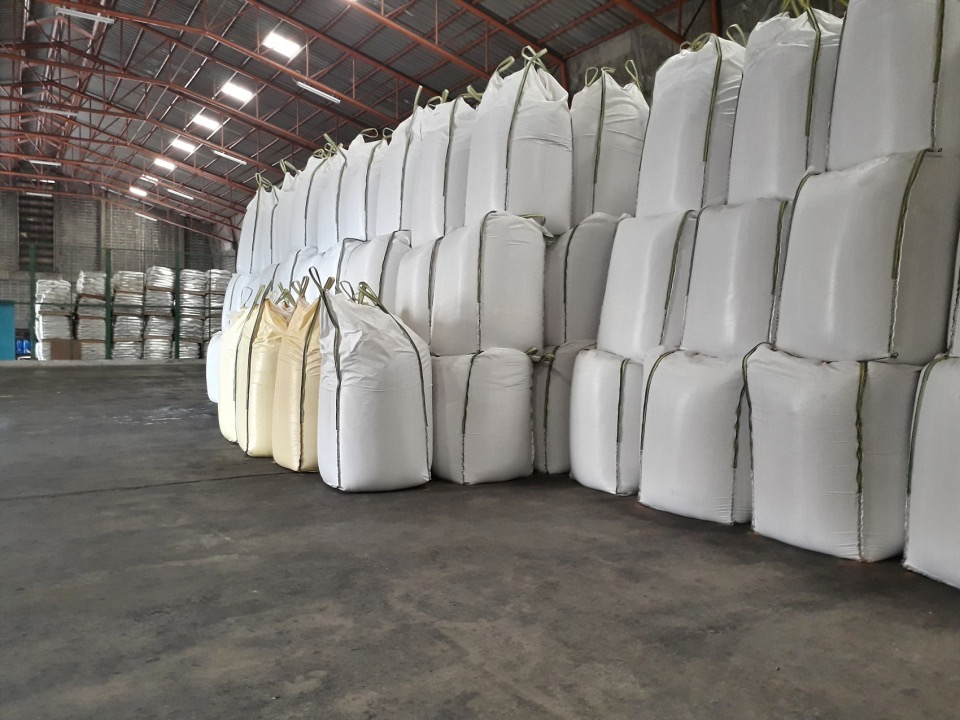
For modern farming enterprises, FIBCs provide peace of mind. They act as a fortress against the elements. Whether you are dealing with animal feed, granular chemicals, or raw minerals, the structural integrity of a woven polypropylene sack ensures that your product remains safe from the point of origin to the final destination. The transition from rigid drums to this highly efficient solution has allowed farms and chemical plants to scale their output exponentially.
How do two loop FIBC bags differ from traditional FIBCs in material handling and transport?
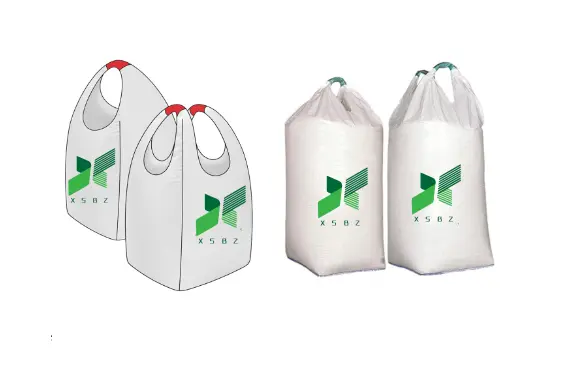
The logistics floor is a chaotic environment where seconds translate directly into dollars. Standard four loop FIBC bags require a forklift operator to carefully align and thread four separate loops onto the machine's tynes. This takes time, precision, and often the help of a second worker on the ground. In stark contrast, two loop FIBC bags are ingeniously designed to be picked up instantly. The loop design typically consists of two thick sleeves or heavy-duty straps that can be grabbed by a standard forklift or a central crane hook without manual assistance.
This distinct difference in material handling completely streamlines the entire loading and unloading phase. When operators are moving hundreds of units a day, the time saved by utilizing two lifting loops instead of four becomes an enormous financial advantage. Furthermore, this type of FIBC bag often features sleeves wrapped in protective material to prevent wear and tear from heavy machinery. The ease of transport is unparalleled.
| Feature | Standard 4-Loop Bag | 2-Loop FIBC Bag |
|---|---|---|
| Hook-up Time | Slow (requires manual aid) | Fast (often automated) |
| Lifting Equipment | Forklift (requires wide tyne spread) | Forklift or single point crane |
| Structural Focus | Corner stress distribution | Centralized heavy lifting |
When analyzing transport protocols, you quickly realize that one and two loop designs are vastly superior for rapid port operations and dense warehousing. They allow a single operator to drive up, hook on, and move out. This heavily reduces the risk of accidents caused by personnel standing too close to moving heavy machinery, perfectly aligning with a safety-obsessed procurement manager's goals.
What are the main benefits of two loop FIBC configurations for fertilizer packaging?
The chemical nature of plant nutrients makes them notoriously difficult to handle. They are often highly abrasive and prone to clumping if exposed to ambient humidity. The primary benefits of two loop FIBC systems lie in their inherent simplicity and unmatched strength. Because these units are typically lifted from a central point, they naturally draw inward when hoisted, creating a compact, solid shape that is remarkably stable. This physical characteristic is perfect for fertilizer packaging, where shifting cargo can cause dangerous imbalances during transit.
When evaluating your bottom line, two loop FIBC bags offer unparalleled cost-effectiveness. Because they require less overall fabric and stitching in the upper loop assembly compared to complicated four-loop variants, they are generally more economical to produce. This makes them a highly cost-effective solution when purchasing in massive wholesale quantities. Furthermore, these bulk bags offer excellent compatibility with large-scale hopper filling systems, dropping effortlessly into place and holding their shape tightly.
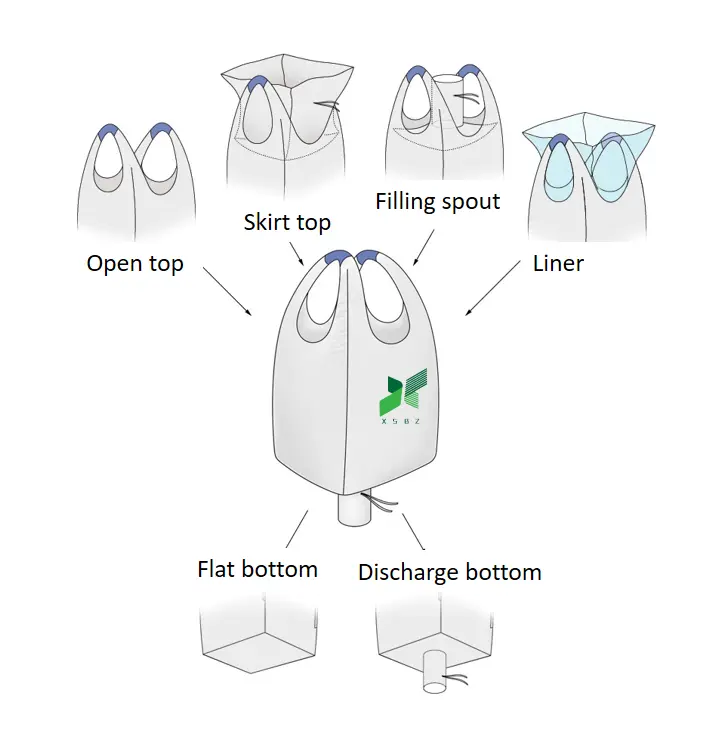
"Safety and speed are the two pillars of industrial logistics," notes an industry expert. "When you deploy1-Loop and 2-Loop FIBC bulk bags, you aren't just buying packaging; you are buying time." Indeed, for highly reactive agricultural inputs, minimizing the time the product spends exposed on the loading dock is critical. These systems guarantee swift, unhindered movement across international borders and rugged rural landscapes.
How can single loop and two loop FIBC bags improve operational efficiency on the farm?
At the ground level, farming operations operate on strict seasonal deadlines. A delayed shipment of seed or nutrients can ruin an entire harvest. Implementing single loop and two loop FIBC bags drastically improves operational efficiency because they are specifically built for rough, fast-paced environments. A tractor outfitted with a front-loader or a simple farm crane can easily snatch a single loop bag right off a flatbed truck in seconds.
The concept of easy lifting cannot be overstated. When a sudden rainstorm approaches, workers must move product indoors immediately. Loop FIBC bags offer the fastest hook-and-move capability in the industry. There is no fumbling with tangled corner straps. The operator drives up, hooks the main loop, and lifts. This rugged simplicity ensures that critical agricultural products are never left exposed to the elements longer than absolutely necessary.
These specialized loop bags are engineered to withstand the abuse of rural settings. They can be dragged slightly, bumped against barn doors, and hoisted rapidly without catastrophic failure. By smoothing out the friction points in daily farm logistics, a high-quality Two loop bulk container bag 1000kg becomes a vital piece of agricultural machinery in its own right, functioning just as importantly as the tractors moving them.
Why is choosing the right liner crucial for fertilizer bulk bags to prevent contamination?
One of the most destructive forces in bulk chemical storage is moisture. Materials like urea and ammonium nitrate are highly hygroscopic; they actively pull water out of the air. If this happens, your finely milled powder will turn into a useless, rock-hard boulder. This is why choosing the right internal liner is the most critical decision you can make for your fertilizer bulk bags. A bare woven bag will not stop microscopic humidity, but a meticulously engineered inner membrane will.
These liners are typically extruded from virgin polyethylene, providing a flawless, waterproof barrier between your valuable product and the outside world. To guarantee your materials move safely and efficiently, the liner must be matched precisely to the outer shell. A FIBC PE Form Fit Liner Bag is specially tailored to mirror the exact internal dimensions of the outer bag. This prevents the plastic from bunching up, folding, or tearing during the filling process, ensuring a perfect seal.

When selecting the appropriate barrier for your packaging, you must strictly avoid cheap, recycled plastics that might off-gas or taint the contents. Proper plastic packaging utilizing a virgin PE liner guarantees zero cross-contamination. It stops the product from sifting out through the woven seams, and it absolutely blocks any external moisture, pests, or warehouse dust from getting in.
What should you look for in a reliable supplier when sourcing your FIBC bag?
Not all packaging is created equal, and in the world of heavy industrial transport, poor quality can be lethal. When choosing a supplier, you must rigorously examine their quality control protocols. A reputable manufacturer will possess advanced drawing benches and clean-room equivalent sewing floors. They will test every batch of yarn for tensile strength and UV degradation. If your partner cannot provide detailed certifications proving a 5:1 or 6:1 safety factor, you must look elsewhere.
There are many factors to consider before placing a massive order. Do they use 100% virgin resin? Do they offer anti-static Type C bags for flammable environments? A great supplier provides a truly cost-effective solution not by cutting corners on fabric weight, but by optimizing the manufacturing process. They will offer a customizedSuper Sack FIBC 1 Ton Big Jumbo Bags for Cement Fertilizer Feed Chemicals Package Bags tailored directly to the specific density of your product.
Furthermore, communication and reliability are paramount. As a procurement manager, you despise shipping delays. A world-class manufacturer ensures clear communication regarding production timelines and shipping logistics. They act as a strategic partner, deeply analyzing your specific packaging needs to recommend the precise fabric GSM (grams per square meter) and lifting configuration required to keep your factory running smoothly.
How do fertilizer bags handle heavy loads without bursting or leaning in the warehouse?
The nightmare scenario for any warehouse manager is walking into the storage facility to find an entire row of bags leaning dangerously, or worse, a bag that has burst open, spilling hazardous chemicals across the floor. Fertilizer bags are built to conquer this exact problem through advanced structural engineering. To successfully carry heavy loads without tearing, the basic polypropylene tapes are woven in a complex interlocking grid that aggressively distributes outward pressure.
To prevent the dreaded "leaning tower" effect, specialized interior baffles are often sewn into the corners. These baffles allow the material to flow into the corners, forcing the bag to maintain a strict, rigid square shape even when stacked three high. Proper ability to stack securely is what separates premium packaging from cheap imitations. A square, solid footprint ensures maximum warehouse density without compromising safety.
Every critical seam is double-stitched using heavy-duty thread, and a robust lifting loop is anchored deep into the side seams, distributing the massive kinetic force generated when the bag is abruptly hoisted. Because these vessels frequently hold well over a ton of dense material, ensuring they can seamlessly endure the violent bouncing of a moving truck while supporting heavy loads is a marvel of modern polymer science.
Why are these flexible intermediate bulk bags the preferred choice for automated filling lines?
In the modern era of high-speed manufacturing, manual labor is being rapidly replaced by precision machinery. These flexible intermediate bulk bags are the absolute preferred choice for automated filling lines because of their incredible dimensional consistency. When a factory calibrates a dispensing hopper, the receiving vessel must fit perfectly every single time.
Automated filling lines operate at blistering speeds. A slight irregularity in the bag's spout can cause massive, expensive spills. Because high-quality bags are manufactured to exact, uncompromising specifications, they offer flawless compatibility with automated spouts. The bulk container stays wide open, accepts the payload cleanly, and can be tied off or heat-sealed in a matter of seconds.
This creates an incredibly efficient and cost-effective workflow. When machines can fill, weigh, and seal hundreds of bags per hour without human intervention, your labor costs plummet while your throughput skyrockets. Designed bulk bags specifically tailored for these robotic environments often feature specialized rigid top seams or structural loops that hold the bag firmly open, eliminating the frustrating bottlenecks associated with floppy, poorly constructed sacks.
How does the right FIBC design drastically cut down on bulk packaging and logistical costs?
Economics in logistics is all about density and reusability. By utilizing the right FIBC, companies can dramatically slash their overall bulk packaging expenditures. Unlike rigid steel drums or hard plastic totes, a woven bag weighs only a few pounds but can hold thousands. This means you are paying to ship your valuable product, not heavy, useless container weight. This fundamental shift completely alters the logistical math in your favor.
These bags offer an incredibly cost-effective method for moving massive volumes. When empty, they fold flat. You can ship thousands of empty bags on a single pallet, which is a brilliant solution for storing packaging inventory when warehouse space is at a premium. During transportation and storage, the ability to maximize every square inch of a shipping container directly impacts your bottom line.
Furthermore, high-safety-factor bags (rated 6:1) can be cleaned and reused for multiple trips. This extended lifespan provides exceptional ROI. Bags offer a reliable solution that amortizes the initial purchase cost over several profitable shipping cycles, definitively proving that smart engineering is the most direct path to financial efficiency.
In what ways are these bulk bags essential for modern supply chains and bulk storage?
The global economy relies entirely on the smooth, uninterrupted flow of raw materials. To safely maintain these massive, intricate networks, bags are essential. They are the silent, uncelebrated workhorses of international supply chains. Whether you are looking to store harvested grain in the American Midwest or export complex chemicals to Europe, efficient storage and transportation systems completely depend on these flexible vessels.
Their impact spans across various industries. Compared to traditional rigid containers, they are infinitely more adaptable. FIBCs offer unmatched versatility, capable of holding everything from fine sugar to jagged rocks. They are meticulously engineered to safely handle bulk commodities under extreme duress. The simple fact is, without these advanced woven structures, the modern agriculture industry would grind to a devastating halt.
Ultimately, these bags are made to conquer logistical nightmares. The bags are designed to protect delicate agricultural products like milled flour, while simultaneously securing rugged items like seeds and rough minerals. From the drawing board to the final destination, choosing to utilize these containers is the smartest, safest, and most profitable decision a modern enterprise can make.
Key Takeaways
- FIBC bulk handling revolutionizes logistics by replacing hundreds of small, inefficient sacks with one massive, secure unit.
- Two loop FIBC bags offer unparalleled speed during handling and transport, allowing single operators to quickly hook and move cargo.
- Integrating a specialized PE liner is absolutely critical when packing moisture-sensitive bulk materials like urea and nitrates.
- A premium bag must be engineered with UV inhibitors and robust baffles to prevent dangerous leaning and UV degradation during outdoor bag storage.
- These bulk bags offer incredible ROI due to their lightweight nature, drastically reducing shipping fuel costs and maximizing container density.
- High-quality loop bulk bags featuring one or two lifting loops can be safely lifted by forklifts or cranes, offering massive versatility.
- Among all packaging options, this type of FIBC bag is definitively the most cost-effective and efficient way to protect your supply chain and your workforce.
Post time: Mar-20-2026